News

December 16.2025

Fish Scale Bag Collecting Machine Solution

01
Project Background

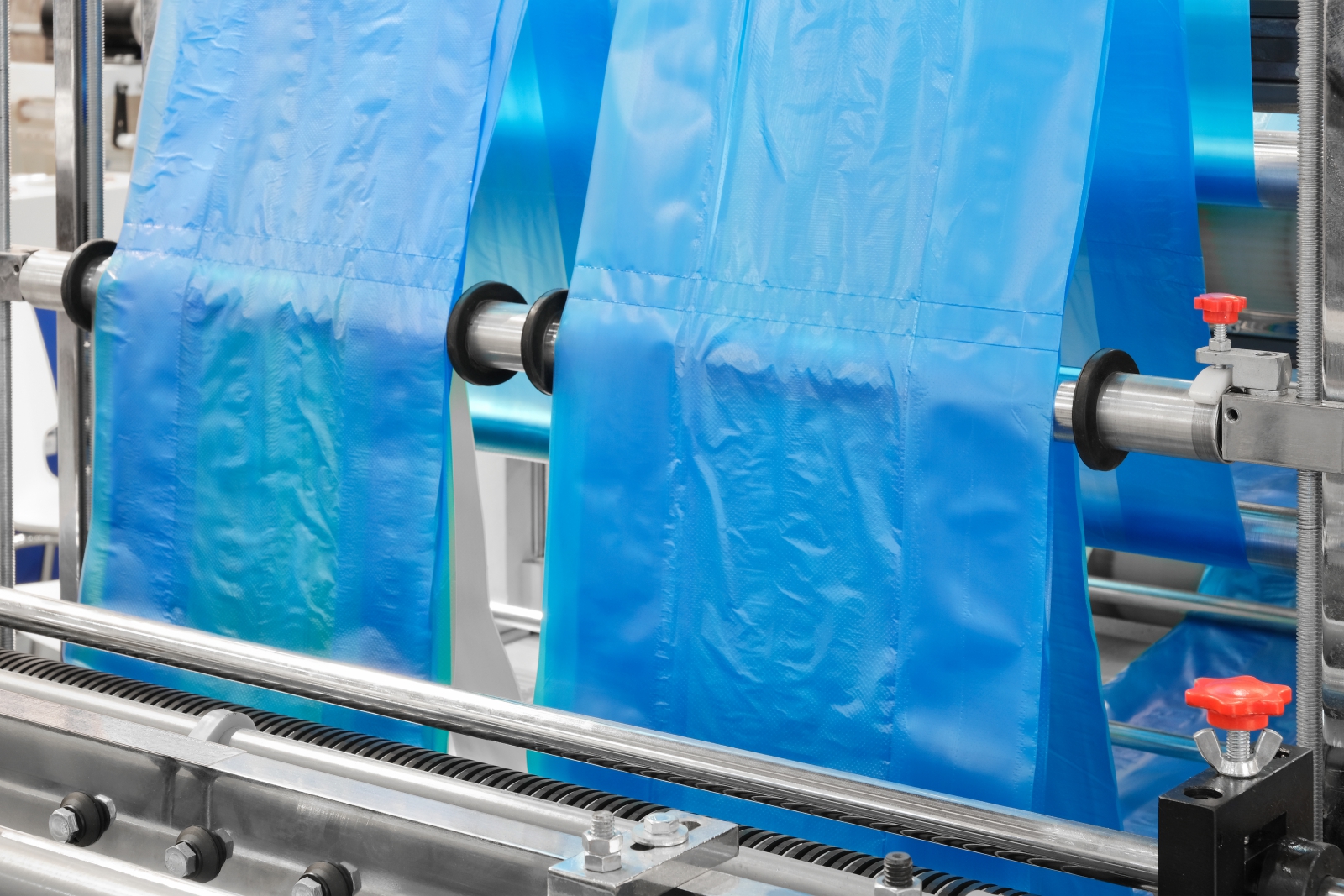
The rise of the no-tear trash bag production equipment project directly reflects the modern consumer market's ultimate pursuit of convenience, functionality, and production efficiency in daily-use products. In the traditional model of trash bag production and usage, consumers had to manually tear off individual bags from a roll. This process not only offered a poor user experience and was prone to waste from uneven tearing but also made it difficult to achieve a quick and tidy match between the trash bag and the bin lid. With the acceleration of the pace of life and the popularization of home automation, market demand for "grab-and-go," seamlessly connected no-tear trash bags has experienced explosive growth.
Faced with this emerging market demand, existing trash bag production equipment reveals significant limitations. Typically focused on basic bag making and winding functions, they lack the integration needed to achieve key processes such as precise perforation for easy tearing, automatic counting, fixed-length cutting, and efficient winding. This results in either low efficiency or poor yield rates in producing no-tear bags, becoming a critical bottleneck constraining both capacity and cost.
Therefore, developing dedicated no-tear trash bag production equipment has become a core link in the industrial chain upgrade. This project aims, through technological innovation, to develop an SC3 system that fully integrates processes such as film unwinding, bag body printing, perforation, bag mouth folding, bottom heat sealing, automatic fixed-length cutting, and finished product collection into one automated unit. This not only meets the market demand for end-product convenience but also, through a high degree of automation, helps manufacturers significantly improve production efficiency, reduce unit costs, and ensure stable product quality. Consequently, it enables seizing the new opportunities brought by consumption upgrades in a fiercely competitive market and opens a high-value-added product track.


02
Efficient and Reliable Professional Solution

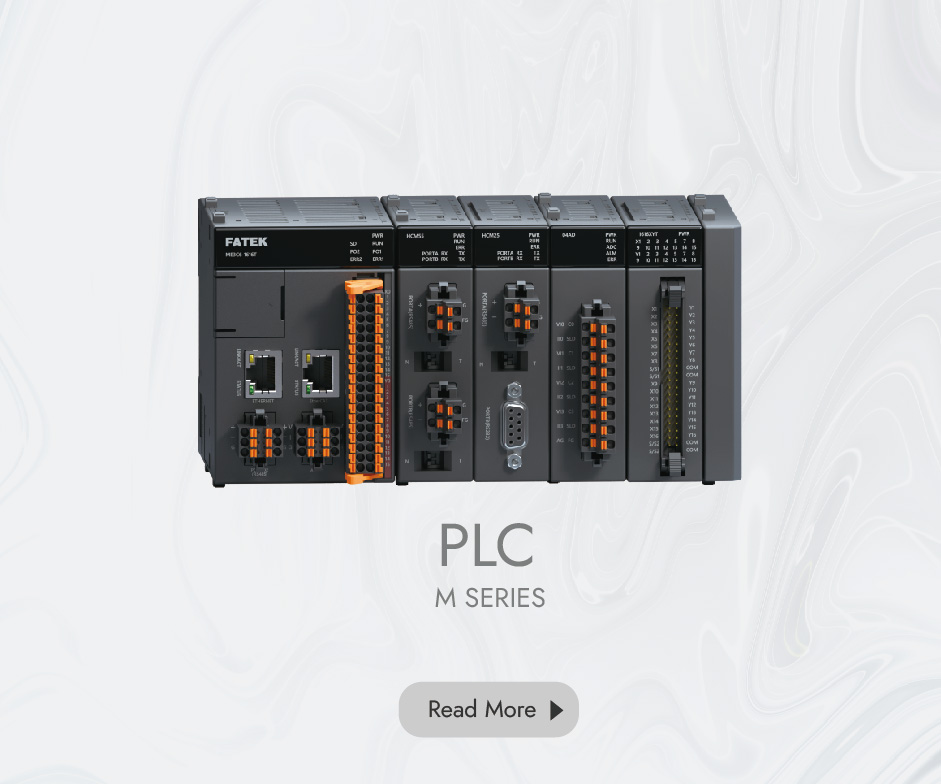
This solution addresses the technical requirements of the automatic bag collecting machine, aiming to achieve efficient and precise coordinated operation of the four core stations: material storage, tearing, stacking, and winding. After comprehensive comparison of various control schemes, it was ultimately decided to adopt the FATEK M-Series 8-axis bus PLC as the core controller of the system. This solution perfectly meets the equipment's stringent demands for multi-axis synchronization and complex motion planning.
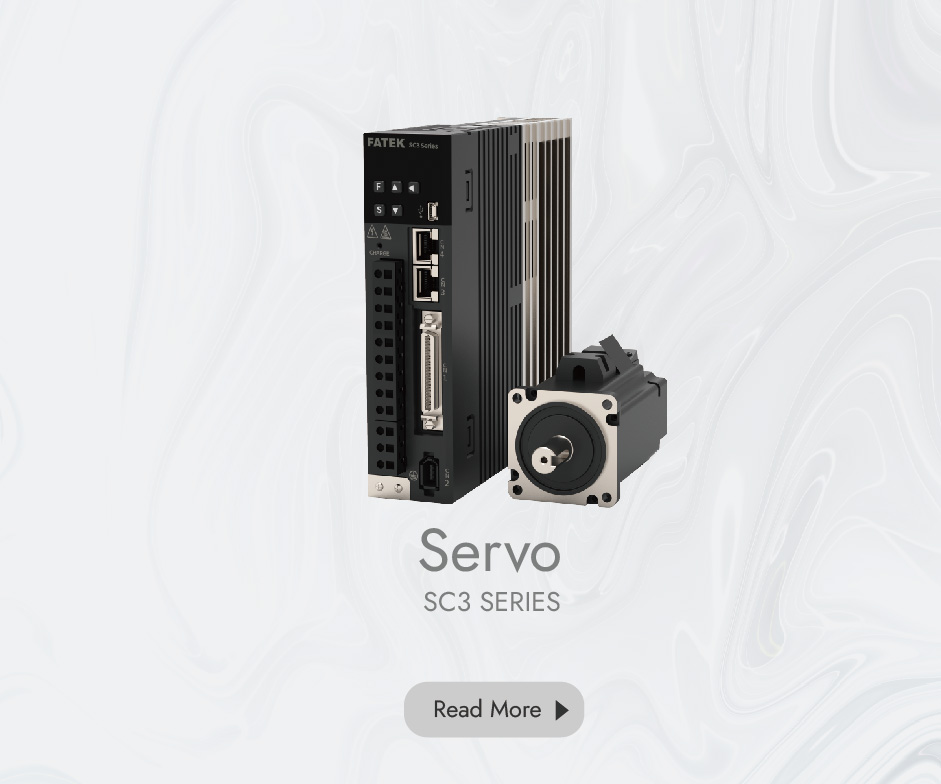
The system utilizes the EtherCAT bus technology of the FATEK PLC to achieve centralized, high-speed control of the eight servo axes. Under this architecture, multi-axis synchronous collaboration control ensures seamless transitions between actions such as the smooth conveyance for material storage, instantaneous acceleration for tearing, precise alignment for stacking, and constant tension for winding, making the entire process continuous and fluid. Crucially, the solution leverages the PLC's powerful electronic cam function to replace traditional mechanical cam mechanisms. By flexibly configuring cam curves via software, the relative motion relationship between the tearing and stacking mechanisms is precisely defined. This not only enables fast and smooth tearing action, effectively preventing bag tearing, but also ensures uniformity in the stacking process.
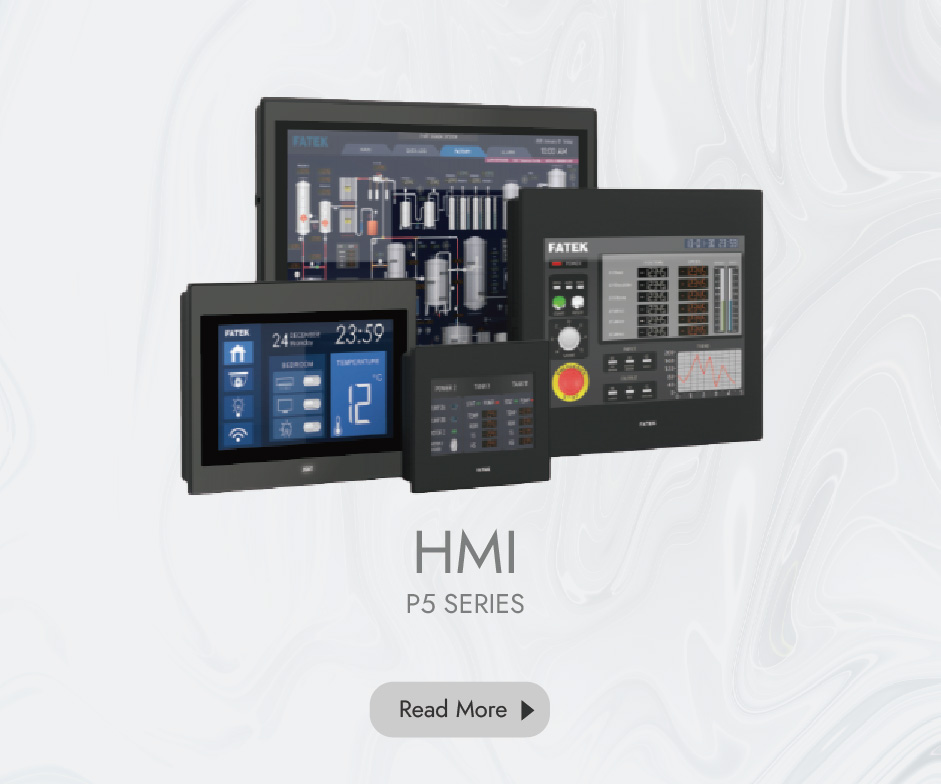
This bus-based control scheme simplifies the mechanical structure and enhances the system's response speed and control accuracy. Through the human-machine interface (HMI), operators can easily set parameters such as bag length, stacking quantity, and production speed, and the PLC automatically adjusts the motion trajectories of all servo axes. The entire system ultimately achieves fully automated production from material storage to finished product winding. While significantly improving production efficiency and product quality consistency, it also endows the equipment with excellent flexibility, enabling rapid adaptation to the production requirements of products with different specifications.


03 
FATEK Makes You Stand Out

► Outstanding System Performance and Integration
High-Speed Precision Control: The FATEK M-Series PLC features industry-leading 0.8-nanosecond instruction processing speed and built-in dedicated motion control chips and algorithms. It can achieve complex motion control functions such as helical interpolation, electronic cams, and flying shear without requiring additional expansion modules.
High Integration, Space-Saving: Compared to solutions that require external motion modules, this solution offers a more compact control system architecture, effectively reducing the space occupied within the control cabinet and simplifying the hardware structure.

► Powerful Scalability and Flexibility
Multi-Axis Control Capability: Without requiring expansion modules, it can easily control up to 16 axes of bus servos through multi-host cascading, achieving high-precision multi-axis synchronous collaboration and leaving ample room for equipment upgrades.
Rich Communication Interfaces: The PLC body comes with 2-channel RS-485 communication ports, enabling high-speed communication with other devices without the need for expansion, making system integration more convenient.

► Significant Engineering and Maintenance Advantages
Simplified Wiring and Strong Anti-Interference: The adoption of the EtherCAT bus solution greatly simplifies wiring, offers high system reliability and strong anti-interference capability, making it suitable for a wider range of machine models.
Intuitive Programming and Convenient Development: It supports Motion Flow graphical programming, allowing complex control processes to be easily converted into motion control programs in a visual way, significantly lowering the programming barrier and reducing development and debugging time.

► Optimized Overall Cost
This solution offers significant advantages in terms of hardware cost, installation and wiring costs, later maintenance costs, and software development costs.


04
FATEK Products Selected
in the Solution
    
HMI
MPLCSC3