December 01.2025
Automatic Cover Machine Solution
| 01 | |
| Project Background The emergence and development of cover machine projects are closely linked to the industrial transformation of the printing, packaging, and binding industries. During the traditional manual operation stage, the production of covers for products such as books, notebooks, and photo albums relied entirely on the skill of artisans. Efficiency was extremely low and consistency was difficult to guarantee, which severely restricted the dissemination of knowledge and the popularization of culture. With the innovation of printing technology and the surging public demand for printed materials, the bottlenecks of manual binding became increasingly apparent. Industrialized production demands products that are not only of stable quality but also possess large-scale output capability. As the final critical process in the formation of books and booklets, cover making automation became an inevitable step in the overall industrial upgrade. Early cover machines primarily addressed the "from manual to mechanical" transition, achieving basic pasting and pressing functions. However, with market development, consumers began demanding higher standards for product appearance and quality. Cover materials expanded from single paper to various specialty materials like cloth, leather, and PVC, posing new challenges to equipment adaptability, precision, and stability. Simultaneously, the continuous rise in labor costs and the extreme pursuit of production efficiency by enterprises have made the SC3, capable of integrated operations like automatic feeding, precise positioning, gluing, edge wrapping, pressing, and output, critically important. Modern cover machine projects are no longer simple mechanical replacements. They deeply integrate precision mechanical engineering, automatic control technology, and intelligent sensing technology, aiming to address core challenges such as multi-material adaptability, stability under high-intensity production, and the realization of complex processes (like rounded corner wrapping and three-dimensional embossing). Behind this project lies the inherent drive within the packaging and printing industry to continuously reduce costs and increase efficiency, the demand for equipment flexibility under the trend of personalized customization, and it serves as a microcosm of the entire manufacturing sector's transformation and upgrade towards automation and intelligence. | |
 | |
| 02 | |
| Efficient and Reliable Professional Solution | |
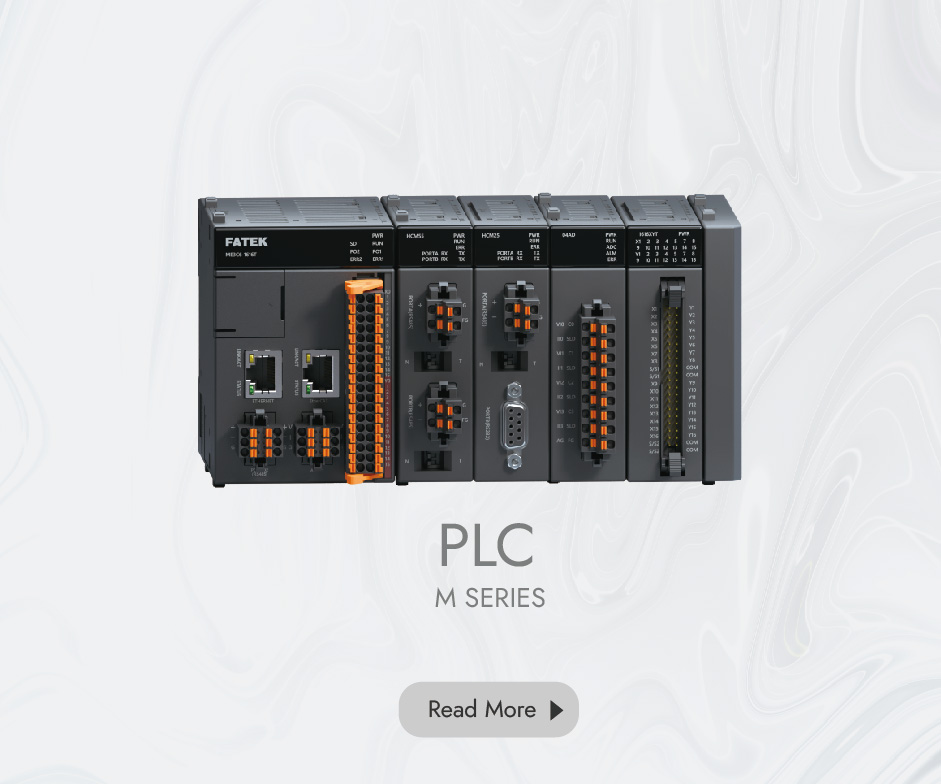
| This solution aims to design a high-performance, high-precision automatic cover machine control system. It adopts the FATEK M-series 8-axis bus PLC as the core controller. The formulation of this solution stems from surpassing the limitations of existing technologies, with the goal of achieving a comprehensive upgrade in equipment performance. During the solution comparison phase, traditional pulse control solutions were excluded due to inherent drawbacks such as response delays, weak anti-interference capability, and insufficient multi-axis coordination accuracy. Conversely, the solution employing a mid-range PLC with external motion control modules was not adopted due to high system integration complexity and limited cost-effectiveness. The selected FATEK M-series bus PLC solution's core advantage lies in its deep integration of key technologies like multi-axis synchronous cooperative control, high-speed interrupt fixed-length control, and servo probe functions. This enables it to directly meet the cover machine's extreme demands for precise positioning. The system utilizes an EtherCAT bus architecture to achieve high-speed, high-deterministic communication with servo drives and other IO devices, ensuring strict synchronization among all execution units. Specifically, multi-axis synchronous cooperative control guarantees the continuity and coordination of processes like cover feeding, gluing, edge folding, and pressing, eliminating material jams or quality defects caused by timing errors. The high-speed interrupt fixed-length function ensures accurate, overshoot-free, and delay-free control over the feed cover length, achieving meticulous positioning accuracy even at full operational speed. The application of servo probe technology allows the system to instantaneously respond to external trigger signals and immediately latch the current position information. This enables precise tracking and compensation for irregular covers or pre-positioned marks, ultimately achieving ultra-high repeat positioning accuracy under complex processes. This solution not only meets all current technical specifications, but its open bus architecture also reserves ample flexibility for future functional expansion and intelligent upgrades for the customer. | |
 |
| 03 | |
| FATEK Makes You Stand Out
►High System Stability and Strong Anti-Interference Capability ►EtherCAT Control ►Interrupt Fixed-Length ►Servo Probe ►IoT Remote Maintenance | |
| 04 | |
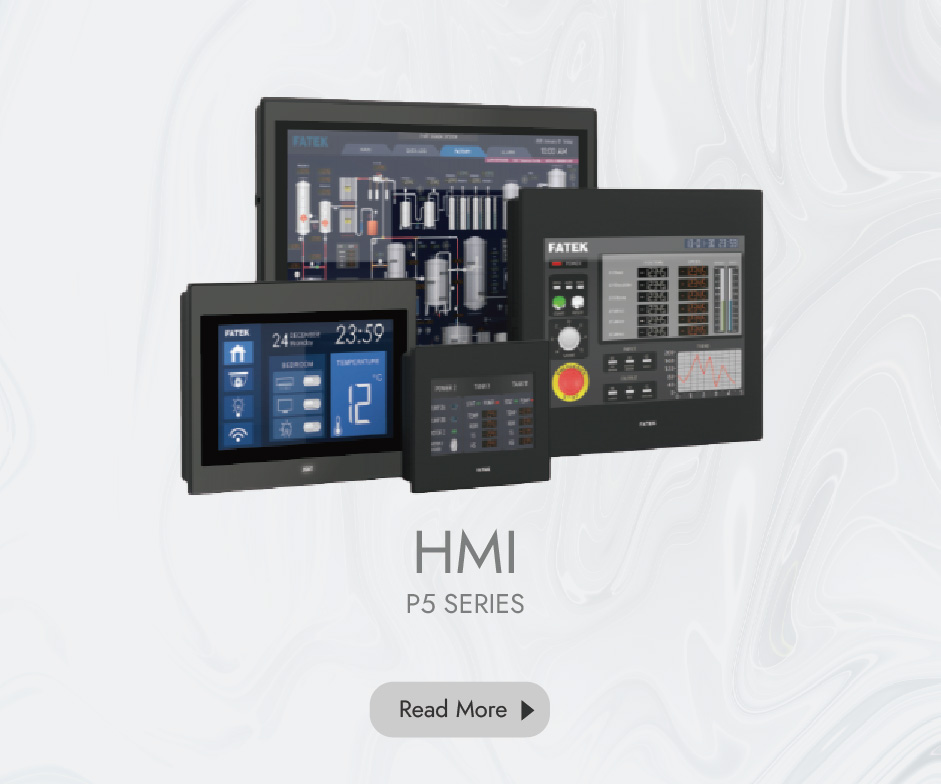
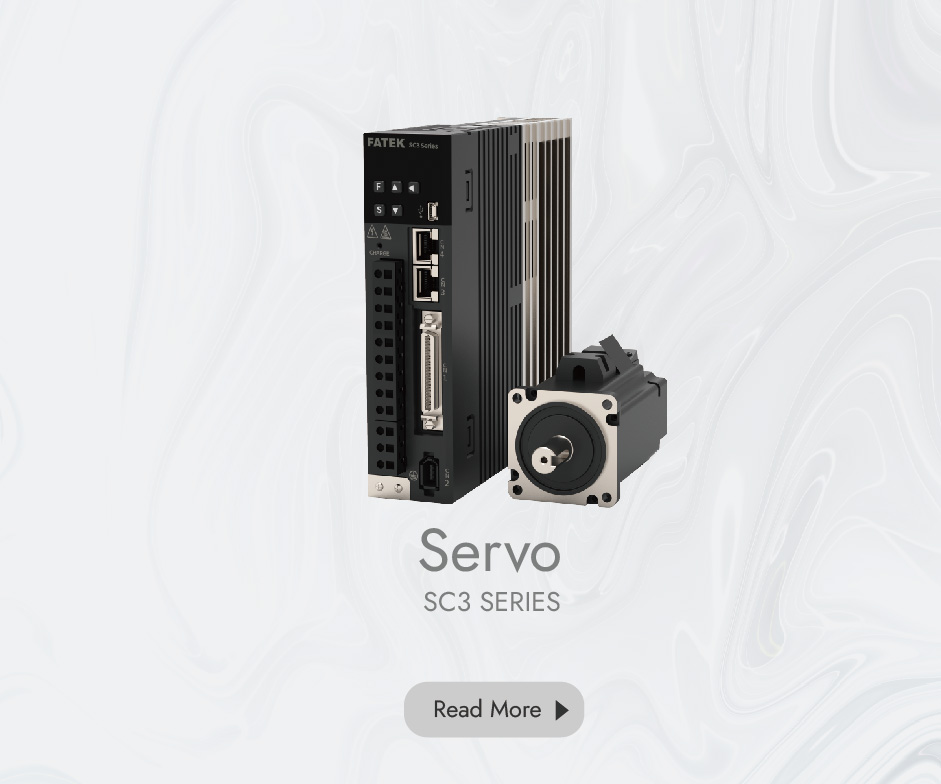
| FATEK Products Selected in the Solution |